News
A Goldberg Kohn litigation team, led by Litigation Group Chair David Chizewer, has prevailed in a case before the U.S. Supreme Court (Wisconsin Bell, Inc. v. United States, ex rel. Todd Heath, No. 23-1127). On Feb 21, 2025, the U.S. Supreme Court ruled unanimously that telecoms participating in the federal E-Rate program supporting school and library connectivity can be sued for excess payouts under the False Claims Act because the subsidy's funds are provided through the U.S. Treasury.
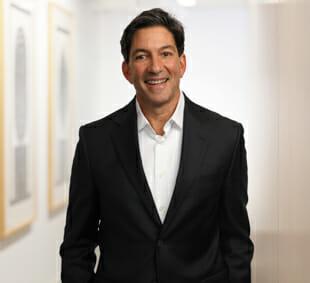
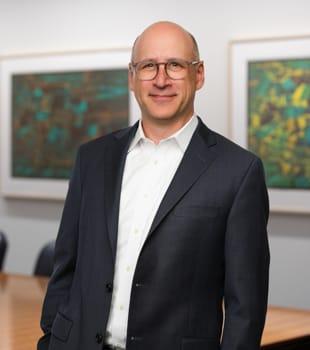
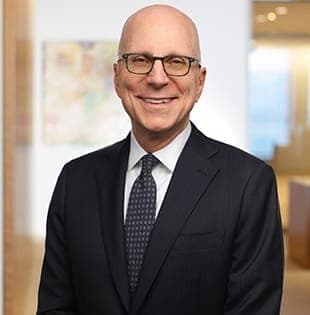
David Chizewer is counsel of record for the relator in the case, Todd Heath. Goldberg Kohn's Roger Lewis and Harleen Kaur also represent the relator, and William Meyers joined the team in preparing for successful oral arguments on November 4, 2024.
The U.S. Supreme Court's decision allows the case brought by Heath in 2008 to go to trial.
"We are gratified that a unanimous court recognized the power of the False Claims Act to root out fraud on government programs such as E-rate," said David Chizewer. "Nothing is more important than protecting the scarce funding available for educating the nation's children and, in particular, those most vulnerable who receive the bulk of these government funds. We look forward to presenting Mr. Heath's case to a jury in Milwaukee."
About the Case
Heath's Claims: In 2008, Heath filed a qui tam action under the False Claims Act (FCA) alleging that Wisconsin Bell, an AT&T subsidiary, overcharged Wisconsin libraries and school districts that participated in the Federal Communications Commission's E-Rate program. After the government declined to intervene in the case, Goldberg Kohn joined the team representing Heath. The case was filed and proceeded in the U.S. District Court for the Eastern District of Wisconsin. After initial dismissal and subsequent appeal, the case proceeded through extensive fact and expert discovery. At the end of that process, the district court granted summary judgment in favor of Wisconsin Bell on the grounds that were soon reversed, as detailed below.
The Seventh Circuit Rules for Heath: Heath appealed, and Chizewer successfully argued before the U.S. Court of Appeals for the Seventh Circuit Judges Easterbook, Hamilton and Lee for reversal of the district court's award of summary judgment. The Seventh Circuit panel ruled in favor of Heath, remanding the case to the district court for trial. The panel held that Heath had provided sufficient evidence that Wisconsin Bell had submitted false claims to the E-rate program and that such claims are actionable under the False Claims Act. Wisconsin Bell subsequently petitioned for rehearing en banc, seeking review by the full Seventh Circuit. That petition was denied, but the original panel issued an amended opinion that included new discussion addressing Wisconsin Bell's contention that payments submitted to the E-Rate program are not "claims" for purposes of the FCA. The Seventh Circuit rejected Wisconsin Bell's argument, ruling in favor of Heath on this issue.
The U.S. Supreme Court Appeal: The analysis in the Seventh Circuit's amended opinion proved central to Wisconsin Bell's subsequent appeal of the case to the U.S. Supreme Court. Whether E-Rate reimbursement requests are subject to the FCA hinges on whether the United States "provided any portion of the money" used to reimburse E-Rate participants or if these requests were presented to an "agent of the United States." Wisconsin Bell's theory is that E-Rate transactions should not fall under the FCA because the E-Rate program is administered by the Universal Service Administrative Company (USAC), which is not a government agency. Funding for the Universal Service Fund (USF) originates from private telecommunications carriers. The Seventh Circuit's amended opinion rejected this argument and presented "three paths" to applying the FCA to the E-Rate program. First, the government "provides" funds claimed through the E-Rate program because it transferred $100 million to the USF directly from the Treasury. Second, the federal government provided funds beyond the $100 million because it requires telecommunications carriers to contribute to the USF. Finally, USAC functions as an "agent" of the United States when it processes claims to the E-Rate program.
The Supreme Court granted certiorari in June 2024. The question presented to the Supreme Court was the same question that the Seventh Circuit's amended opinion addressed: whether reimbursement requests submitted to the E-Rate program constitute "claims" for purposes of the FCA. The brief Goldberg Kohn attorneys submitted in collaboration with co-counsel consisted of the same main arguments that the Seventh Circuit outlined.
At oral argument, all nine sitting justices of the Supreme Court engaged in active questioning of the attorneys about the question presented. CLICK HERE to read the Supreme Court's opinion.
Recent news articles about the Supreme Court's decision are available here and here.