News
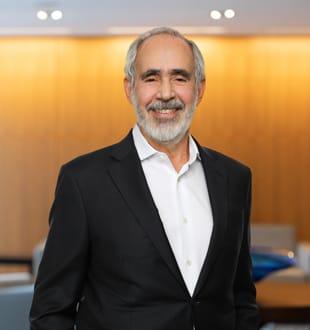
Richard Kohn, Principal in the firm's Commercial Finance Group and Co-General Counsel of the Commercial Finance Association (CFA), is featured in "Richard Kohn: On the Cutting Edge of Cross-Border Lending," published in the September 2014 issue of The Secured Lender.
With permission of The Secured Lender, the full article appears below.
What are the most important developments in cross-border deals today? Where do you see this market growing?
I would mention three developments. The first relates to the nature of cross-border asset-based loans. Cross-border lending is no longer confined to large deals. More and more, smaller lenders are experimenting with cross-border lending to meet the growing cross-border financing needs of their borrowers, and larger lenders are doing smaller deals as well.
Additionally there’s a big change in the type of legal issues that lenders and their lawyers are addressing. We’ve spent the last 10 years identifying countries with laws hospitable to U.S.-style ABL – countries where we can achieve the functional equivalence of the protections that U.S. lenders enjoy at home. Think of it as Cross-Border Lending 101. Now we’ve moved into Cross-Border Lending 201, where we’re focusing on a new generation of issues: How can we allow the borrower’s foreign subsidiaries to use loan proceeds, through consolidated cross-border borrowing bases or intercompany loans, without creating risk for the lender? How can we “centralize” receivables in a lender-friendly country to maximize availability when the borrower has a complex corporate structure with subsidiaries in countries that are unfriendly to ABL? How can we mesh the borrower’s existing cash pooling arrangement with the lender’s need for cash dominion?
The third development is that the efforts of the United Nations, the World Bank, the Organization of American States and other international organizations are having greater impact in the area of secured transactions reform (known as STR): helping countries modernize their secured transactions laws to enable small and medium-sized companies obtain financing in order to grow, create jobs and improve standards of living. CFA has been extremely active in STR, not only through our work at UNCITRAL but in other ways as well.
In terms of the future, there’s every reason to think that cross-border lending will become increasingly prevalent, and that lenders and their lawyers will find new ways to make these transactions more accessible, more routine and more efficient. Western Europe, Australia, New Zealand, Hong Kong and Canada will continue to be focal points in this expansion, but I predict we will see increasing activity in Latin America, Eastern Europe and Asia.
Of course, if the People’s Republic of China ever relaxes its restrictions on cross-border lending, that could be a game changer. In 2005, China amended its receivables financing laws and created a new registry for receivables financing. The result has been a rapid expansion of secured lending in China. By the end of 2011, over $3.4 trillion of transactions were registered. That’s pretty amazing.
I’m particularly interested in Mexico, where the new administration of Enrique Peña Nieto has brought about sweeping constitutional and legal reforms, on a multi-party basis, to give Mexico its best chance in generations to become a serious commercial partner.
"When I started practicing law in 1969, U.S. asset-based lenders had no interest whatsoever in cross-border lending. But in the late 1970s an occasional international element – a foreign share pledge or guaranty – began to appear in deals."
Tell us more about CFA’s involvement with STR.
CFA has done a lot. For example, we co-sponsored a conference on STR in Costa Rica, we spearheaded a roundtable discussion with the Mexican judiciary and other branches of the Mexican government to promote asset-based lending in Mexico, we sent a delegation to China to teach asset-based lending to 170 Chinese commercial bankers, and have been engaged by the World Bank to help lenders in Ghana and Colombia use their recently enacted laws to do asset-based lending.
The fascinating thing about STR is that, although it’s focused primarily on emerging markets where access to credit for SMEs is scarce or nonexistent, the very same efforts are affecting developed markets as well.
For example, the same laws that make it possible for a small business in an emerging market in Latin America or Africa to obtain receivables or inventory financing also make it possible for a U.S. lender to finance a U.S. borrower with a subsidiary in that same country.
CFA’s efforts to promote secured transaction reform not only help CFA members address the cross-border financing needs of their borrowers, but also helps create jobs and raise standards of living for people in emerging markets who will never even know who we are.
I also believe deeply that commerce among business people in different countries can promote understanding in the world, and perhaps help pave the way to peace. A pivotal moment for me came in 1981, when I attended a lecture by the international lawyer Samuel Pisar, who was one of the youngest survivors of the Holocaust and whose writing on the importance of promoting economic interdependence among nations helped to inspire the Nixon administration’s policies toward China, Eastern Europe and the Soviet Union. I have always believed that CFA’s activities in promoting STR, which in turn facilitate increased cross-border commerce, have very powerful implications for a better world. I think that our members can be very proud of CFA’s efforts int his area.
"One day, cross-border loans will become routine, a walk in the park. But I also think we’ll look back with a sense of nostalgia on the early days, when we were figuring it all out."
What do you think is the best way to increase cross-border ABL?
To a large extent the market will take care of this, as U.S. middle-market companies become increasingly globalized, selling their goods and services to customers in other countries, importing goods, setting up manufacturing and distribution facilities in other countries, and setting their sights on foreign acquisition targets. However, CFA can play a big role as well, by heightening the awareness of its members to cross-border lending issues and developments through conferences and educational programs, by sponsoring cross-border initiatives, and by continuing to support the work of the U.N., the World Bank and other international organizations in STR.
Considering your involvement in CFA’s International Lending Conference, please tell us how that event has evolved over the years.
The conference began in 2007 as a legal workshop in Chicago and New York. David Morse of Otterbourg and I had been giving seminars on cross-border lending issues for years, and we were both painfully aware that a one-hour panel on the subject was just long enough to scare the audience away from ever doing a cross-border deal! But we also felt that if we had a good one to two days, we could not only teach the issues, but teach the solutions as well. So we brought in lawyers in from nine or 10 countries to discuss the laws of their countries as well as key macro issues.
After doing this for five years, we thought it would be interesting to move the workshop to London, where it morphed into more of a conference, focusing on market trends and current loan structures and less on the nuts-and-bolts legal issues. I’m pleased to say that it’s been very well-received. But it’s also gratifying when people tell me they got their start in cross-border lending from those early workshops.
The U.N. Receivables Convention is finally moving toward ratification by the U.S. What would this mean for our members and for other lenders around the world? This is a huge development.
The U.N. Receivables Convention (technically, the United Nations Convention on the Assignment of Receivables in International Trade) was the first project at UNCITRAL that CFA worked on. Richard Palmieri had the foresight to get CFA involved in the project over 15 years ago when he was president of CFA, and asked me to help out.
The purpose of the Convention is to promote laws and practices that make it easier and safer for lenders to finance “international receivables” (where the seller and buyer are in different countries) and “international assignments” (assignments and security interests where the lender and borrower are in different countries). Although the Convention was adopted by the U.N. in 2001 and signed by the United States and two other countries and adopted by only one, the Convention has languished for years.
"I literally grew up with CFA. My father, LeRoy Kohn, ran Mercantile Financial Corporation, which was the oldest independent finance company in Chicago, having been founded by my grandfather, Hyman Kohn, in 1917."
Thanks in part to encouragement by CFA, the U.S. State Department is now intensifying its efforts to have the Convention adopted by the U.S. This is extremely important because, although the Convention will not change U.S. law in any material way, adoption by the U.S. should encourage other countries to adopt the Convention. This will make the laws of those countries more harmonious with U.S. law and therefore more familiar to U.S. lenders and their lawyers, which will help U.S. middle-market companies obtain financing for their foreign receivables and, in turn, create U.S. jobs
CFA launched its European Chapter early this year. What kind of impact do you envision that having on the cross-border lending world?
The European Chapter was designed to promote cross-border asset-based lending in Europe, not only among European lenders and service providers, but among U.S. lenders and service providers as well. I think there’s been a real need for a more localized venue to provide education, networking and advocacy for the rapidly growing European ABL market, and this chapter should fill that need. So far it has been very well received.
How did you first become involved with CFA?
I literally grew up with CFA. My father, LeRoy Kohn, ran Mercantile Financial Corporation, which was the oldest independent finance company in Chicago, having been founded by my grandfather, Hyman Kohn, in 1917. My dad became a member of the Executive Committee of CFA (then known as the National Commercial Finance Conference) in 1958, and served as its president in 1973-74 and its chairman in 1975-76. Although I didn’t follow my dad into the finance business, I was caught in its gravitational field, as a lawyer representing commercial finance lenders.
CFA conventions were always a family affair for us. When I was married in 1966, my wife, Joan, was immediately inducted into the CFA family, accompanying my parents and me to Annual and Mid-Year Meetings. I’m not sure Joan realized that was part of the deal when she married me, but she fit right in, and soon found many friends through CFA.
Although my dad passed away in March 2002, I’m grateful that he lived long enough to witness my appointment as co-general counsel of CFA a few months earlier. It was a source of immense pride for him. Last year, at the Annual Convention, there was an exhibit of old pictures from the CFA office. In one of them, there was a smiling, dignified gentleman that looked a lot like my grandfather. I’ve never been able to confirm that it was a photo of him, but I know in my heart it was, and in any event I’m sticking to that story.
You are the president of the Brain Research Foundation and CJE SeniorLife. Please tell us about your involvement with these organizations.
The Brain Research Foundation is a 60-year old non-profit organization that funds cutting-edge advanced neuroscience research, with the goal of developing treatments and prevention of a broad spectrum of neurological diseases. We also fund educational programs for scientists and the general public. I’ve been on the board for some years, and recently became president.
A large part of our grant program consists of seed grants to scientists to do the preliminary work that will enable them to obtain much larger grants from the government or foundations. We’re currently funding a fascinating research project exploring the impact of physical exercise on cognitive function. It’s already been established in humans that regular physical exercise at any age can actually slow down the onset of Alzheimer’s and other forms of cognitive decline, but to date no one has determined precisely how much exercise is actually necessary, and that’s in part what our grant is designed to determine. Of course, we’re all hoping that the answer won’t be 31 minutes a day!
CJE SeniorLife is a non-profit that operates retirement care facilities for the elderly. Here my primary focus is an experimental chess program that Joan and I set up to bring in teachers to teach chess to residents in their 80s and even older.
How did you get involved in cross-border lending?
When I started practicing law in 1969, U.S. asset-based lenders had no interest whatsoever in cross-border lending. But in the late 1970s an occasional international element – a foreign share pledge or guaranty – began to appear in deals. I had been reading a lot about the impending globalization of the U.S. middle market, and it seemed logical and inevitable to me that, as U.S. companies globalized, they would ask their U.S. lenders to finance their cross-border activities.
Since international law was a subject that had always interested me since law school, I decided to investigate the area, and pestered clients to do the same. My big break came in 1989, when a client asked me to document an asset-based credit facility to fund a seven-country leveraged buyout, with advances in four currencies, in an impossibly short time frame. At the time, a cross-border deal like that was a novelty. I’ll never forget him saying, “You’ve been talking about this international stuff for a long time, so now let’s see if you can actually do it!” Well, somehow we did do it, and I built the practice from there, closing deals, writing articles and speaking on panels, becoming involved in UNCITRAL, initially as a member of the CFA delegation and then on Expert Groups and as a consultant, working on other CFA cross-border initiatives, and more recently teaching cross-border lending at The University of Chicago Law School.
What’s your prediction for the future of cross-border lending?
One day, cross-border loans will become routine, a walk in the park. But I also think we’ll look back with a sense of nostalgia on the early days, when we were figuring it all out.